A
ALLIUM · JOBS.ASHBYHQ.COM
POSTED 202D AGO
Full Stack / Product Engineer
◆ New York, New York, USA◆ Full-time
About the role
The 4 biggest blockchain strengths are also its weakness
Permissionless nature leads to fragmentation of meaning
Decentralization leads to too many standards
Immutability leads to exponential data + query infrastructure complexity
Neutrality means that no one is accountable for interpretations
Blockchain data is public. It is not usable at institutional scale. Despite being open, blockchain data is fragmented, hard to interpret, and painful to maintain. Even a simple question like “Who are the largest Ethereum token holders over time?” can require running nodes, ingesting full chain history, decoding contracts, cleaning edge cases, and writing complex SQL.
Blockchains are optimized for writes, not reads.
They are built for consensus and execution, not searchability, standardization, or financial interpretation. Blockchains are computers, not databases. Every protocol defines its own schema. The same economic action can be encoded in dozens of different ways. The result:
Fragmented standards
Exponential complexity
No accountability for interpretation
Events without economic meaning
Finance cannot operate on that, it needs an effective system of record.
Allium is building the System of Record for Onchain Finance
Allium ingests, verifies, and standardizes data across 140+ blockchains and 30+ petabytes of history. We close four structural gaps that prevent blockchains from becoming systems of record:
Semantic Gap: Translating raw events into financial concepts like payments, trades, deposits, and staking income
Standardization Gap: Mapping thousands of protocols into a single canonical cross chain schema
Infrastructure Gap: Read optimized, globally distributed data at web scale
Accountability Gap: Auditable methodology, SLAs, and SOC 1 and 2 compliance
The result is a neutral, canonical data layer institutions can build on with confidence.
Finance is moving onchain
Stablecoins, tokenized assets, trading, staking, and lending are growing rapidly. Institutions need a trusted source of truth for onchain financial activity, just as they rely on Bloomberg or DTCC in traditional markets. Raw blockchains cannot serve that role.
As AI agents begin transacting autonomously, the requirement becomes even stricter. Agents cannot reason over raw event logs. They need structured data, attribution, condition checks, and auditability.
Allium is the read layer that makes onchain finance usable for humans and machines.
Who We Serve
Allium powers three core personas with the same canonical data foundation:
1. Finance, Accounting, and Risk TeamsThey need reliable, audit grade answers. They rely on Allium for financial reporting, reconciliation, compliance, risk monitoring, and defensible metrics that can stand up to auditors and regulators.
2. Engineers and Product Teams They need low latency, production ready infrastructure. They use Allium to power wallets, trading systems, payment rails, staking infrastructure, and real time applications that cannot break.
3. Strategy, Research, and Executive Teams They need clarity and insight. They use Allium to understand ecosystem economics, market structure, user behavior, competitive dynamics, and where capital is flowing onchain.
and of course.. agents 🦞. Our customers and users include Visa, Stripe, G-SIB Banks, Big 4 Accounting firms, BCG, Coinbase, Phantom, Uniswap and cited by the Federal Reserve.
Role
We need a product focused engineer who loves to BUILD, BUILD & BUILD! The problem statement is straightforward - we have tens of thousands of data schemas integrated in 100+ different workflows today. how does one design an experience for our customers to just get their job done in this sea of data? how does one design the right primitives that come intuitively to them?
Qualities
do you love to build?
do you have (some) taste?
do you get joy from permuting and trying every combination of UI, Workflow and layout to get that perfect screen transition for the user?
do you get annoyed when something on an app just feels that little bit off?
do you get joy from users raving about how your product makes them feel special?
do you have an inner diva that critiques all things design, but yet (somehow) have the humility to know that nothing's perfect?
do you love lego? or the idea that building workflows should be as simple as stacking lego bricks?
do you love helping users get their job done?
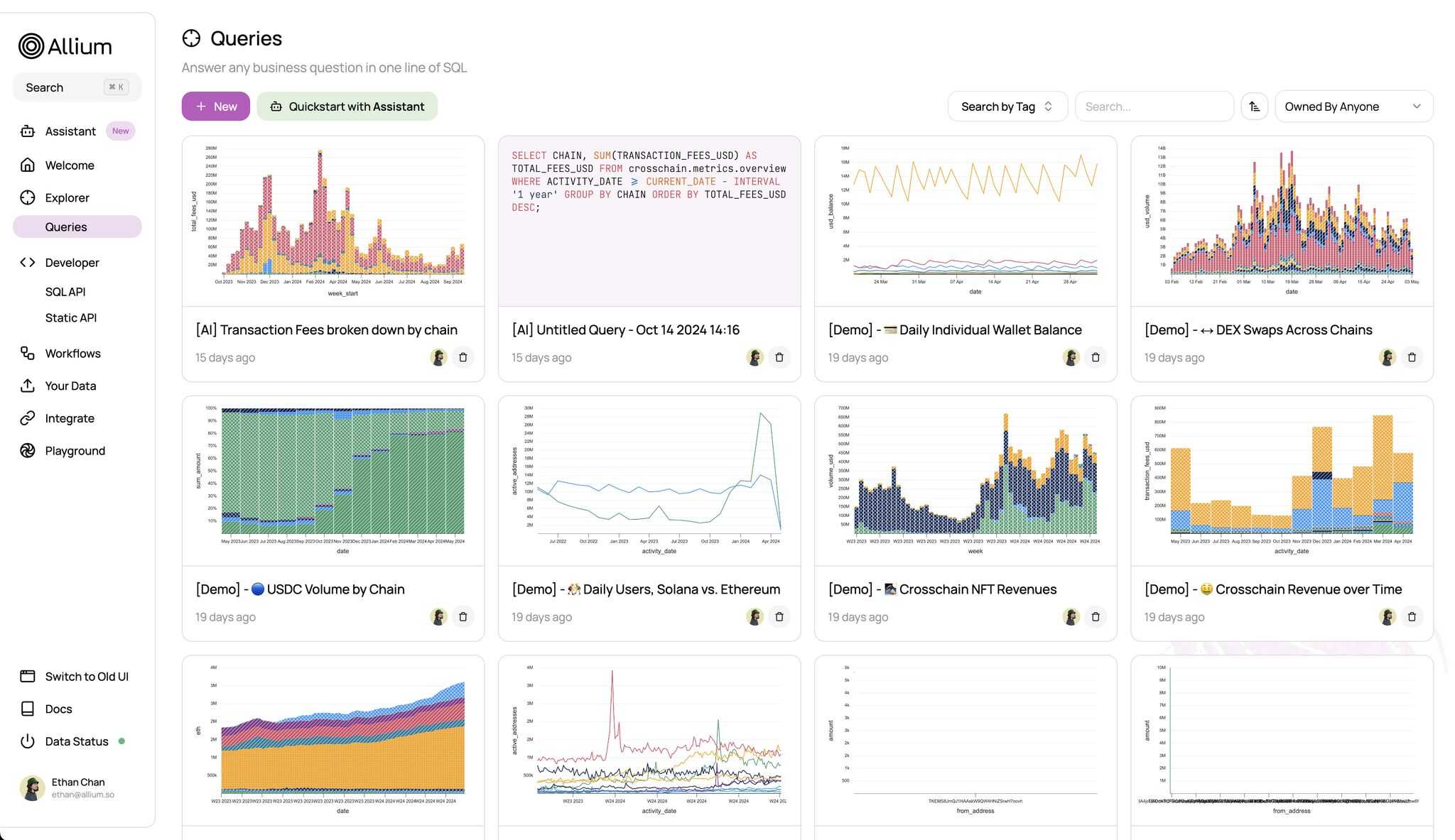
Don't take our word for it, what our customers say about us (https://www.allium.so/blog#love)
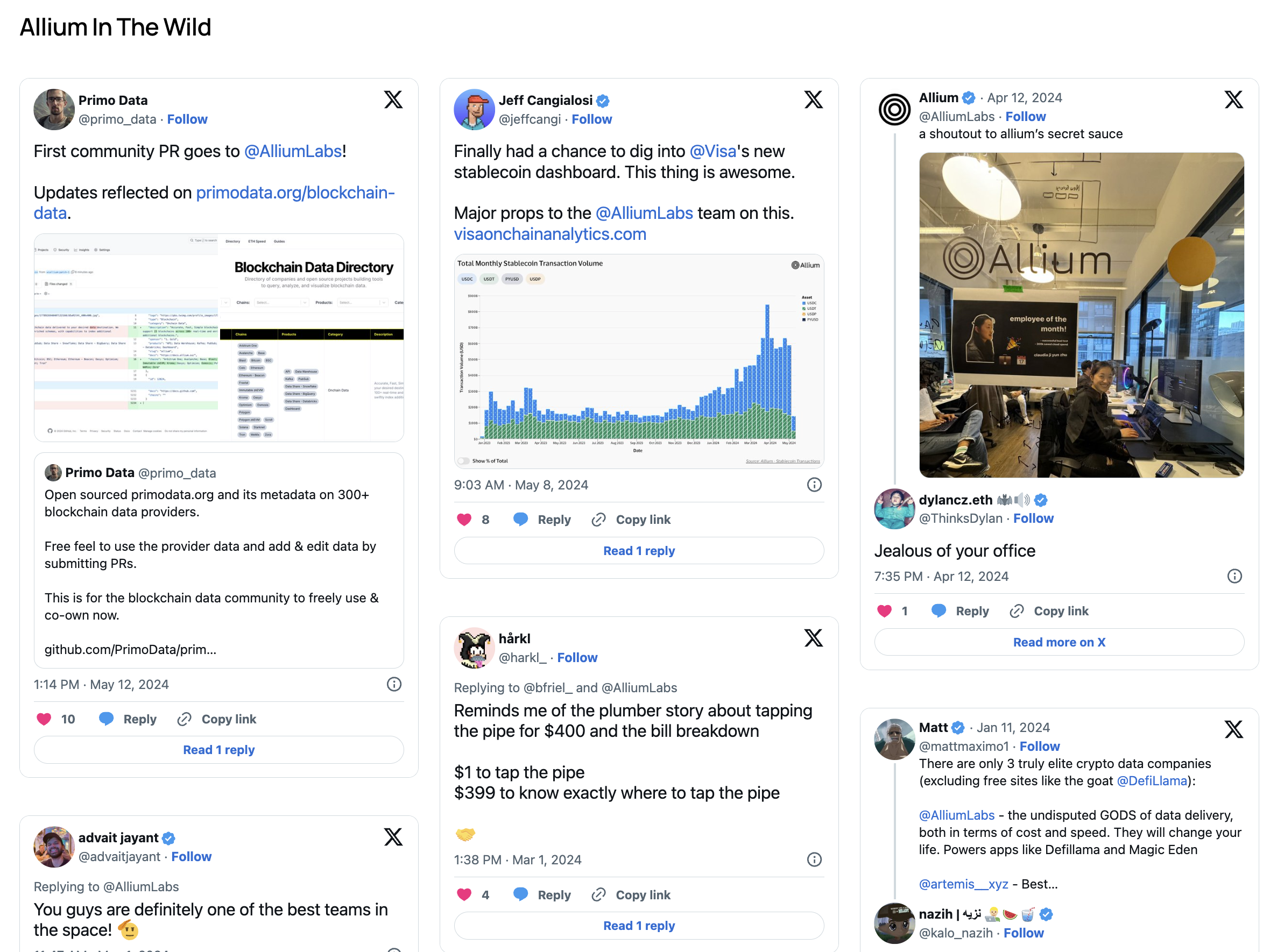
What some ~cool people have to say about us:
The Information's Top 50 Startups (https://www.allium.so/post/allium-named-to-the-informations-50-most-promising-startups-of-2025)
Mario Gabriele from The Generalist's Future 50 Startup List: https://www.allium.so/post/allium-named-awardee-of-the-generalists-inaugural-future-50-startups
Tomasz Tungus from Theory Ventures: https://tomtunguz.com/allium/
Bucky Moore from Kleiner Perkins: https://www.kleinerperkins.com/perspectives/allium-series-a/
Ok.. now for some tough love, here are the values we strive for at Allium:
Pro Athlete Mindset - Consistency. Day in and day out, in pursuit of excellence. A win yesterday does not guarantee (or even imply!) a win tomorrow. I hope anyone who supports a failing sports team will feel the pain (cough Man United fans) of inconsistency
Figure It Out & Extreme Ownership - Every day is unexplored territory. There are new engineering frameworks, new legal docs, new compliance, new sales, new regulations, and new operational procedures every single day. If you don’t know it, learn it. If you can’t learn it, find someone or a product that does it. If you can’t find someone, find someone who can find someone. It is never lack of resources, but lack of resourcefulness.
High Agency - (One of) the highest commonality between all successful people is their responsiveness, most successful billionaire CEOs still reply to emails within minutes (within wor